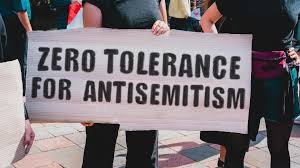
These have not been two optimal years for Jewish Americans. Hatred of Jews as people who stay separate dates back perhaps to Pharaoh, who addressed his perception of our communal power by implementing a slavery system, one created by our own successful immigrant ancestor Joseph. Most of our history has us as a successful subset within a larger dominant population. We created internal institutions in response to our circumstances. Places of worship, a religious court system for internal disputes, economic wealth, enduring literature, effective educational systems. Selected individuals or families would periodically gain prominence amid the majority culture. But we experienced expulsions and massacres when prevailing cultural values shifted.
Wednesday, February 11, 2026
Addressing our Anti-Semitic Reality
These have not been two optimal years for Jewish Americans. Hatred of Jews as people who stay separate dates back perhaps to Pharaoh, who addressed his perception of our communal power by implementing a slavery system, one created by our own successful immigrant ancestor Joseph. Most of our history has us as a successful subset within a larger dominant population. We created internal institutions in response to our circumstances. Places of worship, a religious court system for internal disputes, economic wealth, enduring literature, effective educational systems. Selected individuals or families would periodically gain prominence amid the majority culture. But we experienced expulsions and massacres when prevailing cultural values shifted.
Tuesday, January 7, 2025
Studying Anti-Semitism
An extensive article by staff writers at the JewishTelegraphic Agency profiled a fairly recent project sponsored by the Anti-Defamation League to study the efficacy of different approaches to combating anti-Semitism.
https://www.jta.org/2025/01/06/united-states/everyone-has-a-plan-to-fight-antisemitism-few-have-studied-what-actually-works
Some brief background. Anti-Semitism, either hatred of Jews or resentment of Jews, has been around since antiquity. Assigning definitions remains unsettled, but like Justice Stewart's assessment of pornography, you know it when you see it. Through history, it has had overt, even deadly expressions. In America, this has been mostly subtle. Our Founding Fathers created a policy of tolerance, continued by our immigration processes which at one time did not restrict entry of healthy Jews, mostly from central and Eastern Europe, arriving at a few ports in massive numbers. While American anti-Semitism has never been deadly, with a few isolated exceptions, America has had its pockets of anti-Jewish sentiment. Some displayed a public face with Klansmen and American Nazis carrying placards or hotels posting signs indicating that Jews could not obtain rooms there. Titans of capitalism sometimes operated under conspiracy theories of Jews having surreptitious methods for controlling the world. Others set quotas for access to elite schools or prime employment, though almost never zero representation. Amid overt or tacit hostility, episodes of welcome appeared, some more sincere than others. Tammany Hall in the early twentieth century solicited votes from newly franchised Jewish citizens, often asking them to identify their Rabbi who could help with organizing them. As growing American industry, financial markets, and professions expanded at about mid-century, college educated Jews had acquired valuable talent and energy to propel these enterprises forward. At the same era, the face of anti-Semitism shifted. The Dixie bigots never disappeared. But there arrived a new presence in America. An Islamic element, wealthy and influential by control of essential oil markets, took the position that dhimis like Jews should never have sovereignty. Anti-Israel became the marker of Anti-Semitism, an intersectionality that once again threatens Jews physically, not just in America but everywhere from Munich to Israeli buses to American public places. In the past year, as Israel tries to contain very real threats and American Jews in alliance with most of our national elected officials decry this return of animosity, that previously contained Anti-Semitism has gained popular support among American progressives and minorities. The Internet has offered everyone parity of expression on their preferred platform with little prospect of negative consequences such as loss of employment. Even when adverse consequences can be applied, leaders of our great Universities have been reticent to enforce protection to Jewish students and other members of the visibly Jewish public.
In response to a deadly anti-Semitic event, the kangaroo trial followed by the lynching of Leo Frank in Atlanta in 1913, a group of philanthropists banded together to found what became a legacy Jewish agency, now known as the Anti-Defamation League. At the time, and today, public unflattering stereotypes of Jewish people in public forums abounded. This era also brought into existence many public service agencies, Jewish, secular, sectarian, economic. Unions gained prominence. The Scouts, NAACP, our Federation system for pooling and distributing donations, Lions Clubs, and many other sources of philanthropy and advocacy trace their origins to that era. As we advanced forty years, Jewish acceptance in America had become established, though African-Americans and other minorities had not done as well. Advocacy through the ADL expanded for all groups that had been treated poorly, a source of core values, but later a source of friction as allies with more success found areas of divergent interests. And that is a quick summary of a hundred years of advocacy.
Next an anecdote. My state university offers courses to seniors through its Osher Institute affiliation. During the pandemic, I enrolled in a Zoom series on contemporary issues. Each week, the three organizers would invite somebody of personal or organizational prominence to present their activities for about an hour, then open Zoom to questions. Among those presenting was a representative of the local ADL chapter, either the director or assistant to the director. She focused on her organization's educational efforts that spanned over a hundred years, a source of great pride to her. Two questions came from the audience that stayed with me, as the presentation took place just after the pandemic's peak but before the October 7 massacre with its outpouring of Anti-Zionist public canards. One question went something like, if you are so experienced at this and doing the same for a hundred years, why do we still have Pittsburgh and Charlottesville? Do you have alternative activities that may be more effective? The other question came from somebody more familiar with the ADL and how it has engages in its advocacy mission. How has the agency's directions changed as leadership passed from Abe to Jonathan? Both very legitimate questions. And she groped for answers that a group of highly educated seniors retired from some very upper-tier professions realized she did not have.
While educated people have an advantage over the ignorant, the most educated around attend universities whose admissions offices turned me down. There are imprints, scripting, opportunism, In other spheres we have warning labels on tobacco and alcohol products, public service announcements, and people collecting outcome data. Education did not reduce smoking and smoking-related illness in America. Taxation and restriction of opportunities to smoke in public places did. A good law will outperform good intentions every time. Drunk driving injuries have declined because of enforcement of laws, not because people with DUI were forced to attend classes. It is likely the same with prejudice. It was OK to deny black people restaurant seating in Alabama when the law permitted it, taboo when there are real penalties for people who try. And with the change in mandated behavior comes an acceptance of the new behavior as the right path. Smoking bad, drink judiciously, everyone gets seated at every restaurant in America. Sometimes it is best to force people to do what they should be doing without being compelled by laws and penalties.
The JTA article, reprinted in The Forward where I read it, poses a similar question to those at the Zoom ADL seminar. How effective is education as a tactic to deter anti-Semitism? Do some agency heads like Jonathan at ADL or Ted at AJC, both with extensive political backgrounds in the Democratic Party, come to their current responsibilities with imprints that Abe and David, their predecessors of very long-standing tenure did not have?
That becomes the heart and soul of the extensive JTA analysis. ADL, for all the sacred cows that it has protected from its shechita knife, engaged somebody who asked the same question that the person at the Zoom seminar asked. If we are so good at this, why can't we avert the cycles of anti-Semitism in whatever form we find them? Maybe the focus on public education has become that beaten dead horse. If it needs replacement, what should the more efficacious approach be?
While headquartered at the ADL, something like this requires a wide net of collaboration with independent thinkers whose careers do not depend on saluting the sponsor. Across America and beyond, there are institutes, universities, publications, and other organizations that conduct objective research on anti-Semitism. Findings can be a great resource, the justification for changing direction. Or when legacy organizations have been around forever, inconvenient discoveries can be resisted with the full structure and force of the agency. The ADL VP profiled had begun assembling this network, though the role of the ADL, or AJC as a parallel advocate with comparable vast resources, seemed a bit amorphous given the scale of the project. Some institutions were mentioned. One that was not is one to which I donate, Indiana University's Institute for the Study of Contemporary Anti-Semitism. These scholarly enclaves have existed for a considerable time. Their faculty, as most are university subdivisions, have bibliographies, tenure, and grants. However, any alternatives to mass public educational efforts have not been very well publicized, let alone adopted in a coordinated way by our legacy advocacy agencies.
Best practices research, now a pillar in my own medical profession, has produced copious guidelines for how to manage a wide variety of medical challenges. They are presented with a scoring system that includes the quality of the data that generates the recommendations and the strength of expert consensus. I think that would also be the model for social policy, whether creating best practices for policing to avoid some of the unfortunate incidents and for assessing the impact of interventions to mitigate anti-Semitism. It is not likely that blaming Jews for the woes of other populations will disappear, but they can be marginalized from the public sphere in a better way than what we experience now. I think enough evidence has accumulated that defaulting resources to public education has not brought the desired outcome. What might replace this, with a better outcome as the end in mind, remains uncertain. The research already exists, both in how to recognize best practices and how to assess alternatives in an objective way. Coordinating this effort seems more nascent.
Tuesday, December 19, 2023
Ineffective Message
Two years ago I enrolled in a course at the Osher Institute which highlighted contemporary issues. Each week the course committee of four which organized the presentations invited an expert, about half from my state university faculty, the others from non-profit agencies that promote the communal good. I sort of panned the class in the semester evaluation and never enrolled in subsequent semesters, in large part because of a message theme, that idea version of the Greek Chorus, which for many classes registered as I'm not buying that. Most of my other course selections get rave feedback for content, effort, and teacher. As a university graduate, medical graduate, and physician, credibility has always been the coin of the realm. I have no reason to dismiss Thermodynamics even if my understanding is now paltry, or to tune out a survey of American education where disagreements with the presentation are integral to the discussion and welcome. For the contemporary issues, there was a committee agenda and challenge was sidestepped. The price of not confronting legitimate challenges to the party line is usually some version of disrespect. The legitimate points unify with the dubious, or even manipulated ones. They go into the mental wastebasket without separation.
There's a disturbing poll making the news. Without getting into the science of polling, just accepting the results at face value, it seems young people ages 18-24 expressed a majority view that the world would be better without Israel. https://nypost.com/2023/12/16/news/majority-of-americans-18-24-think-israel-should-be-ended-and-given-to-hamas/
Tuesday, June 6, 2023
Reddit as a Unique Jewish Resource
Dialog has been among Judaism’s most sustainable features. Our Torah’s greatest heroes ask for advice, whether Avraham delegating the task of finding the ideal wife for his son or Moshe needing a resolution from God himself to assure fairness to the Daughtersof Tzelaphchod. Our Talmud centers around the giants of our history posing dilemmas or queries to each other. Some as Hillel and Shammai were contemporaries who could present responses to each other. More often, though, the sages lived centuries and miles apart, yet our Oral Tradition, eventually recorded for posterity, modifies these disparate ideas so that readers for all time will create a mental image of the most learned of men sitting across a table from each other, not only sharing their knowledge and perspective with each other, but with us as we study their legacy. Sometimes we must study alone, but our most vibrant exchanges occur with a teacher or with a partner. Minds intersecting, teachers of greater ability creating new peers has been among Judaism’s most enduring gifts to humanity.
Yet, accessibility has always challenged us. At our Passover Seder we recognize one who
does not know how to ask, and take the initiative to teach what we can. But we also sidestep the reality of many who
do know how to ask, ones who could be wise, but lack access to the
conversation. Even in Talmudic times,
barriers existed in the form of fees or location or the immediacy of earning a
living to support a family. Later,
access became competitive based on merit or wealth, far from universal, much
like we have in our secular world where universities can only realistically
accept a fraction of applicants. And
even when entry succeeds, we encounter masters who play favorites, nurturing
some, excluding others, whether in the form of pay to play, clashing
personalities, or yichus that generates entitlement by familiarity. Jews take pride in literacy being nearly
universal in all our scattered communities.
Bringing everyone into the dialog has lagged behind.
Our modern electronic connections, rapidly expanded in part by the
urgency of pandemic isolation, has added an important element that our finest
academies could not hurdle, one of maximum access, perhaps approaching open
access. Within months of mass closures,
our venerable Jewish agencies began creating seminars for anyone with Zoom
capability to join in. Public leaders
could be interviewed in real time by experienced questioners, with time left to
answer selected inquiries by the international expert. Where you lived, whether you could purchase
an admission ticket or give a substantial donation, or which other affiliations
you had no longer mattered. Even a
nobody like me could have his name introduced to the world by the moderator
when my own question got selected.
Seminars were also conducted on a less grand scale on endless topics by
local or regional experts, yet they remained primarily talking heads, still a
long way from our traditional panels or chevruta formats that allow experts to
speak to each other over distant locations and separated eras with a
bidirectional exchange of minds between those teaching and those being
advanced.
Our electronics also created Chat Rooms in real time and social
media by minimally restricted posting, encountering disruptors of various types
or posts of offensive content that no reputable editor would accept for a print
edition. Indeed, The Forward,
America’s flagship newspaper of Jewish content, along with many others, had to
discontinue its option of allowing readers to comment on its own articles
online for lack of ability to maintain verbal derech eretz worthy of a
dignified Jewish exchange. One very promising solution, however, has emerged.
Reddit’s r/Judaism originally came to my awareness by a feature
article in The Forward. https://forward.com/culture/478625/reddit-jewish-judaism-forum-r-judaism/
Once read, I signed up for access, enrolled in two subreddits, r/Judaism cited
by The Forward and r/my home state, none others. Reddit assigned me a posting
name, a short phrase so random, and used only for Reddit, that my anonymity
almost certainly could not be breached.
While the site boasted tens of thousands of subscribers for r/Judaism on
the entry display, then and now the postings never seemed overwhelming in volume
or the number or subjects introduced for discussion, maybe about twenty in a
typical day.
It’s easy to say what the virtual conversations are not, more
difficult to delineate what they are.
They are not Talmud shiurim, though there is a daily link to the
Daf. They also are not Jews promoting
their agendas, though there are some seeking some empathy or guidance as they
lick their wounds, including some inflicted by Jewish sources. There are really no people engaged in
vendettas, whether political, ethnic, or other attempts at retaliation against
thems who done me wrong. Instead, we
have mostly inquiry or invitations for conversation, that core element of
dialog that our contemporary institutions have struggled to capture. In some ways Reddit functions as a virtual
Multiplex or a professional convention where several presentations appear
simultaneously. But unlike the cinema
where a choice must be made on which movie to watch, which mandates which not
to watch, the Reddit presentations can be accessed in sequence without
disappearing.
What emerges seems to be the spectrum of interests that float
around waiting to be displayed to people of similar interests, whether links to
articles published in a variety of periodicals, notable art, queries about history,
or how fragments of our literature play out in our daily lives. But I don’t think we need an open forum to
satisfy this. Judaism in all its
diversity really has three common end points that Reddit may have captured
better than any other. The compelling
posts are more focused on what we have experienced, how we were treated, or
uncertainties of upcoming new experiences for the poster that are not new at
all to those able to respond. What did I
find bothersome, how can I best cope with what awaits me?
Common inquiries come from non-Jews. People get invited to a synagogue or a
shabbat dinner, completely new territory.
Proper attire, proper decorum, gifts, avoiding the innocent faux pas. Many have no concept that congregations have
non-Jewish guests frequently as members invite friends and professional
colleagues to share their celebrations.
Many do not realize that our default is one of graciousness and
tolerance. Inquiries from converts or
people in the process of converting or even contemplating conversion
abound. Amid their forum, they can
expect to encounter people who have already successfully converted and others
Jewish by birth who can reassure them that we regard our newcomers as All-In. The curious include a fair number of Muslims,
impeccably polite in their curiosity, seeking to clarify parts of our culture
or belief that they had encountered in their own milieu but not in ours. It is our chance to be the kind of friends
that they haven’t made yet, and with rare exceptions those who respond rise to
the occasion.
And within our own diversity, we have special challenges. People often want to become more observant
than they currently are, and often in difficult circumstances. A fellow opened a discussion of trying to
remain observant while living in a small American town, perhaps a university
center or branch outpost of the corporation that employs him. Within a few hours, dozens of responses came
through from people not only sympathizing with the efforts he needs to gather,
but from others similarly isolated geographically juggling parallel scarcities
of Jewish living. Sometimes we need a
reminder that while Walmart brought Jews to Bentonville and NASA brought us to
Huntsville, some Jews live as the Town Jew.
While many famous people, Soupy Sales and Edna Ferber among them, were
raised as the only Jews in town, we think that as something of an historical
relic. As people in that circumstance
relate their current reality, we realize that not everyone has a synagogue in
proximity. Moreover, not all Jews live
in America or Israel, as we are scripted to believe. Those in South America and Europe express
different challenges to their aspirations as Jews. And the Americans eagerly help out.
Antisemitism in America has become more overt, well publicized in
both Jewish and secular media. Yet for
many of us, that’s where we see it. Personally,
we go to our workplaces each day, corporations or other agencies that take
pride in their multiculturalism that make expression of ethnic animosity an enforceable
taboo. Then we shop for our needs at big
box places, travel to other metro or resort areas where Jews are one more part
of the mix, worship on Shabbos where we greet the guard who wasn’t there five
years ago and is there now “just in case.”
Anti-Semitism is conceptually there, but mostly external to our lives
and if present at all, a deviance from the accepted communal norm. Some of the most poignant inquiries come from
people living in areas where publicly expressed condescension of Jews, whether
slurs, exclusions, taunts, or other unpleasant experiences are still within the
limits of acceptance. School children
get mercilessly taunted by other students with school officials not wanting to
set limits for fear of backlash from parents, or worse, accepting that
community standard as a desirable offshoot of their commitment to their own
local religious loyalties or traditions.
These victims do not have recourse, at least not accountability of those
with rightful authority. They either do
not know about our Jewish advocates such as ADL or JCRCs, or be too isolated to
access them. Yet the stories that these
people convey are also our surrogate stories, and perhaps never accessed by the
agencies that can offer the most guidance.
Through these and many other requests for interaction, we
passively receive the thoughts, or sometimes apprehensions, of people that rarely
intersect with Judaism’s organizational infrastructure. For better or worse,
upside and downside, our Jewish world has invested heavily in Leadership
Development, assigning the movers and shakers special prominence, allowing
choice of proteges for the future, creating programs, some such as Leadership
Training Fellowship of my youth petering out, others more successful though
presiding over an American attrition within our Jewish institutions slowly
disconnecting us over decades. But the
anonymous, unrecognized people turn to Reddit.
Nobody on this electronic forum has power. Nobody can manipulate either poster or
responder. Nobody has a title that
requires submissiveness. Nobody has to
sit in the Eighth Row as Moshe did when metaphorically time-transported to
Rabbi Akivah’s virtual class. And my
presence has value to somebody else who knows nothing about me but can still
discern the breadth of my experience, familiarity with written sources,
history, and organizational resources that they would find useful. No agendas, no rejections. Just people who have come to recognize the
site’s presenting invitation, always appearing in the first dialog box: No
Such Thing as a Silly Question. Or as
the people who trained me professionally would say, continued when my
proficiency enabled me to train the next generation, “the only dumb question is
the one you wanted to ask but didn’t.”
And on Reddit, and arguably no place else in vast Jewish universe of
ideas, do the inexperienced actually ask with no reason to fear a demeaning
response.
Yasher koach to the creators and to
the moderators who understand fully what constitutes Derech Eretz.
Thursday, July 29, 2021
If They're Really So Good at This
ADL Seminar. Lasted but a few minutes before I left. Covid isolation has introduced me to opportunities not previously available. Arguably atop the list has been free seminars via Zoom sponsored by top notch agencies who invite world class experts who will take questions even from a peasant like me. These will hopefully continue once Covid becomes part of history. The Anti-Defamation League, whose previous director I placed atop my most admired fellow Jews, stepped down, keeps a low profile so not to overshadow his successor who from my assessment can be easily overshadowed, has a legacy exceeding a hundred years of advocating against anti-Semitism in particular but other forms of ethnic animosity as well, or at least their public expression if not private thought.
Ethnically driven physical attacks and verbal assaults have expanded after a few decades of attempted brotherhood. World War II gave genocide its deserved bad reputation, but we still had future slaughters in Cambodia, Rwanda, and what is left of Yugoslavia. Anti-Semitism appeared in a different form in France and Germany as Islamic immigrants expressed their imprinted ideologies about twenty years ago but remained marginalized in America until more recently. Unlike Europe, for every incident in America there has been an overwhelming public response condemning this activity but a more tacit response in the privacy of voting booths giving it an OK.
Back to the seminar of short tenure. Anti-Semitism has become more public in America and the ADL has in its mission to resist it. The form morphs to meet circumstances from denial of employment, university admission, or social club membership in my grandparent's time, a very visible lull in my parents' time, and now exploitation of easy public access of any view, no matter how ugly, by social media or other electronic global communication. The ADL opted to focus on social media, where I must say, being something of a technologically deprived geezer, my own cyberspace niche really does not receive anti-Semitic provocations. May be more prevalent to the younger folks whose subscriptions link them to campus events. I do get some FB pseudoFriends posting some stuff rather unflattering to the Black population but more a byproduct of their political affiliation that has placed Jews IN and Blacks OUT.
Most Zoom panels sponsored by agencies invite experts of different backgrounds to give their presentations. This one had only ADL staff, competent no doubt, but not diverse of mind. And from the introduction they pitched the ADL's origins and legacy. As they did this, the obvious question arose. If they've become America's premier agency at combating Antisemitism, why do we have a resurgence on their watch? Maybe they really aren't as good at this as they would like us to think.
Medicine takes a parallel path. The people in the pulmonary office's waiting rooms have more portable oxygen than patients in their primary doctors' waiting rooms. The endocrinologist's patients have HbA1c of 10% a year into treatment. Maybe experts address meltdowns better than we prevent having meltdowns. I would think if the ADL were really an effective agency, over a hundred years their mission would have moved from combating overt antisemitism to ethnic hatreds not as well controlled or keeping residual anti-Semitism in the sewers with the manhole covers sealed in place. But they really have not effectively addressed root causes or enduring remedies, leaving them to engage in skirmishes as they arise. Probably have better ways to approach this ongoing challenge.