
I do not know its origins that far back. Most of the participants hold membership at a sizable Conservative synagogue, the one where my wedding took place many decades ago. That era brought the Jewish catalog and its corollary, the Havurah Movement. Conservative congregations have undergone many different types of transitions. Women have acquired worship parity in most places. Intermarriage has brought to their membership large numbers of people who have their church as their childhood imprint. Education and literacy have become bimodal. Some families seek the trappings of Judaism, others delve into its many facets, achieving knowledge of culture and history. They spurn after school Hebrew schools for their children in favor of all-day, all-Jewish environments. Many gain skill with challenging parts of liturgy, from leading services to reading the scriptural portions as they get recited publicly. Rabbi's are caught in the middle. They need to have casual worshippers not feel burdened, let alone intimidated, but want to offer their most dedicated followers the abiltiy to partake of tradition.
The Jewish Catalog, now more than fifty years past its initial publication, described this divide, along with ways to address it. One approach adopted by many large synagogues, usually championed by a member or two rather than the Rabbi, was to separate portions of the congregation who found the abridgments to the sanctuary experience an irritant, and let them worship elsewhere in the building the way they preferred. The synagogue of my wedding had such a contingent. Once a month, a subgroup would separate themselves, conduct a full liturgy and Torah reading and supplemental materials, give their own sermon, basically make themselves self-contained without hired clergy.
This reached its extreme on the Holy Days. Many congregations have let this season become a caricature of what happens in the sanctuary the rest of the year. People who pay full dues but only come on these few days expect a pageant. Big donors come to the Torah either rehearsing the blessings in advance or reading a transliteration. Women appear in the finest that summer clearance at the Outlets offer. English readings, to make sure the Christians and others of limited Hebrew facility don't get overwhelmed. A Rabbinical sermon, usually of quality and pertinence, but without excessive references to scriptural and Talmudic underpinnings. Lots of people there, except kids who the Trustees vote to herd someplace else in the building to maintain solemn decorum. Those who come those days leave impressed with the work that went into it. Those who worship with the congregation every Saturday morning register that experience as Judaism Lite.
What the subset prefer is the Orthodox service without the inconvenient Orthodox restrictions. Liturgy in its entirety chanted by individuals with expertise in doing this. A sermon with sentence structure and content worthy of a college graduate but also peppered with a foundation of sacred source. Kids running around with preschoolers being coached by parents to kiss the Torah during its processional. No rabbis, at least not hired for the purpose. A service dependent on the abilities of those who prefer to attend there over the more formal, and often cathedral-like experience of their central sanctuaries on the Holy Days. And with gender parity of participation. Many women have acquired impressive skills. With families, sometimes multigenerational, seated with each other. No physical barriers separating men and women. And an ample parking lot, as spaces can be at a premium when large suburban synagogues conduct their Holy Days services.
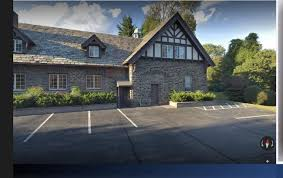
A group from a vibrant congregation with observant members dedicated to Conservative rules acted upon their preferences. Thirty years previously, they created a committee to make their preferred worship environment happen. They rented a building, a regional mansion repurposed as a meeting venue. The organizers handled the many logistics. Security of location, invitations, assigning fees to worshippers to meet expenses, chairs, securing an Ark, borrowing two Torah scrolls and setting each to the portion that will be read from it. Most difficult task, a recurring one, to find people with needed skills to lead the various portions of liturgy, which can be daunting for the Holy Days. Indeed, Judaism has a side hustle market for Cantors and others with this skill to get paid in the thousands for doing this in congregations, hotels, cruise ships, and other places that do not employ a full time Cantor or music director. Here, they needed skilled volunteers. Many worked months to master the Musaf Service, the morning's most challenging portion. Shofar Blowers needed to create all three sounds without side noises. Torah reading's musical sound differs on those days, so people prepared to perform with the Holy Days tune had to be recruited. Sermons were easier to invite, as the group creating this had its share of professors, rabbis who did not have their own pulpit, and others both knowledgeable about Jewish sources and experienced at public presentation.
While the project had its core participants from one synagogue wanting an experience differnt than what their home congregation offered, this stand-alone Holy Days was made available to anyone willing to pay the nominal fee. That brought a slippery slope of people who did not want to pay full annual dues to an established shul but still wanted a Holy Days experience for much less. Probably some took this option but most attendance came from the synagogue members who initiated the project.
My wife and I, along with adult children when in town, began attending for Rosh Hashanah quite a number of years ago. We probably traveled the furthest to get there. This could be an invitation to take pot shots at my own congregation's activities, but I'll refrain, except for two annoyances. Our congregation follows the traditional liturgy, engaging a professional cantor, either by payroll or per diem contract. We do not permit the participation of women, other than to maybe introduce a prayer. We have a volunteer male choir, which performs well but becomes one more audience focus. My home synagogue has another tradition. The President chooses a person, or sometimes a group, to honor each day of Rosh Hashanah. These individuals are announced in advance, for which many of us make a donation to the synagogue's General Fund in their honor. I've only once found any named individual enough of a personal irritant to not write a $36 check, but my wife overrode me on that. What I dislike is the pomp that makes two long services even longer as people give testimonials to the honoree and the honoree gives words of appreciation of his own. While congregations need their own traditions, and honoring men and women who have given added effort to the synagogue's well-being need recognition, to say nothing of the shul needing a few extra bucks, I will drive a bit to a traditional service like the Scout House to avoid this.
Even though we were not members of the dominant contributing congregation, the people at the Scout House always treated us inclusively. My wife became one of their prayer leaders. I got an Aliyah with some frequency, an honor that would bring me a bill for a few hundred dollars if I wanted one at my own shul. They figured out that I had reasonable facility with the Hebrew and the choreography of the service. The organizers occasionally tapped me as Second Gabbai for the Torah reading. And the Musaf Leaders and Shofar blowers were predictably awesome. A regular participant has a disabled daughter, or more correctly, a disabled young adult worships among us. Using an electronic device, she also acquired here task each service. The people there have that blend of smart and kind, something that has largely disappeared from much of our public discourse. The value of being smart and kind together enhances as it becomes less frequent.
The long run of this service is about to conclude. The reasons are several and cumulative. I think the inflection point would be the original Conservative shul hiring a new young Rabbi, a rising superstar, who everyone at that shul admires. He is sensitive to the religious variations within his congregation. People who used to come to the Scout House have been opting for their home shuls instead. A few key individuals have left. One died a few years ago. The organizing couple responsible for much of what came to be, downsized as empty nesters a few years ago. They sold their McMansion within walking distance of the Scout House in favor of an upscale downtown condo.
The neighborhood around the Scout House, while always expensive, has gotten out of reach for most people early in their professional careers. These were our Musaf leaders and shofar blowers. Congregations around the area will pay for their skills, a boost to young families trying to pay mortgages. Obtaining the required talent, other than sermon speakers, had gotten too precarious.
So for many reasons, the leaders who sustained the experience opted not to organize it for this year. I will miss much of it. The drive, while long, has never been difficult. I like hearing these very talented women, most of them young, leading services expertly. The people who deliver sermons are uniformly adept at it. The equal of any congregational Rabbi. Over time, I've come to know the people. A fellow doctor who I knew from his online presence, I got to greet in person each year. A widowed friend found a widowed mate. They've appeared the last few years. People I knew from the past who have moved away share enough of my attachment to designate the Scout House as their Holy Day destination. My sister-in-law lives nearby. She gets a visit from us after the First Day.
It's an experience my home shul cannot duplicate. Yet my home shul has always performed above threshold. The irritants, while there, are not deal breakers. No reason not to import some of the Scout House legacy. It would form most of what I would put on my yellow pad, imagining the optimal shul.


